By Talyta França
In the heart of the Arabian Peninsula lies Qatar, a nation known for its outstanding skyscrapers and natural gas riches, but that also places high value on its equestrian heritage, deeply rooted in its culture and tradition.
This legacy recently took center stage in international events hosted in Doha this year – the International Equestrian Tour Championship in January and the Longines Grand Prix in February – marking remarkable moments in Qatar's journey toward preserving its equestrian traditions in the modern world.
The resounding success of this year’s edition of the Doha Tour, with 220 riders representing 21 countries and 15,000 tickets sold, has stirred excitement in the local equestrian community. Mona Hammoudi, 21, a showjumping rider and current bronze medal winner at the Doha Tour 2024, noted the significance for her and the 93 riders representing Qatar in the competition, as the first in the country to be international since it was originally held in 2017. “That's mainly what motivated all of us to take part,” Hammoudi said. “We've been doing nationals until now. The Doha Tour was the first chance for us to compete internationally.”
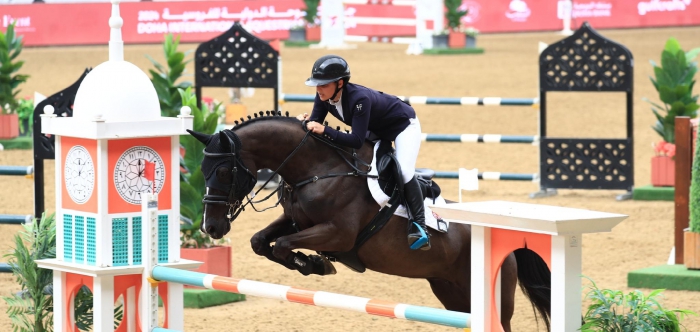
Mona Hammoudi at Doha Tour 2024. Picture: Tamim Al Shaibani.
Hammoudi, who grew up in Qatar and represented Jordan in international competitions, says riders in Qatar and elsewhere in the Middle East have been reaching a very high level on the field. “In competitions that happen here in Qatar, there are Qatari riders, Saudi riders and Jordanian riders that are doing so well [in] amazing competitions,” she said.
For centuries Qatar has revered horses as symbols of nobility, grace and strength. From serving as vital companions during nomadic journeys across the desert to playing pivotal roles in historical conflicts for Qatar's independence, horses have been central to the nation's narrative.
Yet, even over the five decades of its independence and rapid pursuit of modernization, Qatar remains firm in its commitment to preserving its equestrian legacy. “It is important to preserve and promote horse heritage, because the Arabs have close relations with horses, and these horses at certain times got neglected,” said Khalid bin Ibrahim Al Sulaiti, general manager of the Katara Cultural Village Foundation. “Now, Qatar is taking care of breeding and encouraging people to breed more Arabian horses.”
The collaboration between Katara and the National Center of Agricultural Exhibitions and Agricole Competitions S.A. in France secured Qatar’s rights to be the first country, in 2023, to host the World Arabian Horse Championship outside France in 42 years. Al Sulaiti said the agreement will further strengthen Qatar’s equestrian heritage, which will host the event again in 2025.
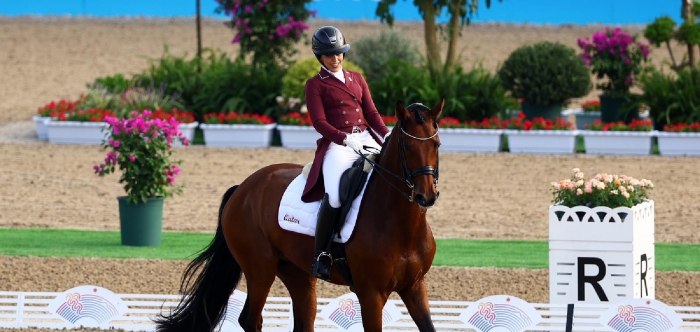
Maryam Al-Boinin at the Asian Games 2023. Picture: Asian Games.
Qatar's dedication to preserving cultural heritage also includes efforts to engage and inspire the Qatari public. Maryam Al-Boinin, 26, a Qatari international dressage rider, believes that her involvement as a female equestrian competing both nationally and internationally elevates the heights of the sport for her. “With equestrian events, Qatar has proved itself on a world scale that it is one of the best places to compete at both in terms of venue and organization of competitions,” she said.
As the winner of the Dressage Competition at the 2023 HH Amir Sword Competition held in Qatar, Al-Boinin says competitions such as this one, the Doha Tour and Longines play a significant role in fostering cultural exchange for the equestrian community. “It was already shown how our culture has integrated with the equestrian sport, even if it means having a sword as a trophy.”
“Qatar’s efforts are incredible at preserving the heritage of the equestrian sport,” Al-Boinin said. “The ongoing competitions and festivals for horses have increased tremendously throughout the years. And I believe [they] will continue to do so.”